Bryndzové Halušky Gets a Glow-Up: Meet the Trnava Chefs Changing How Slovakia Eats
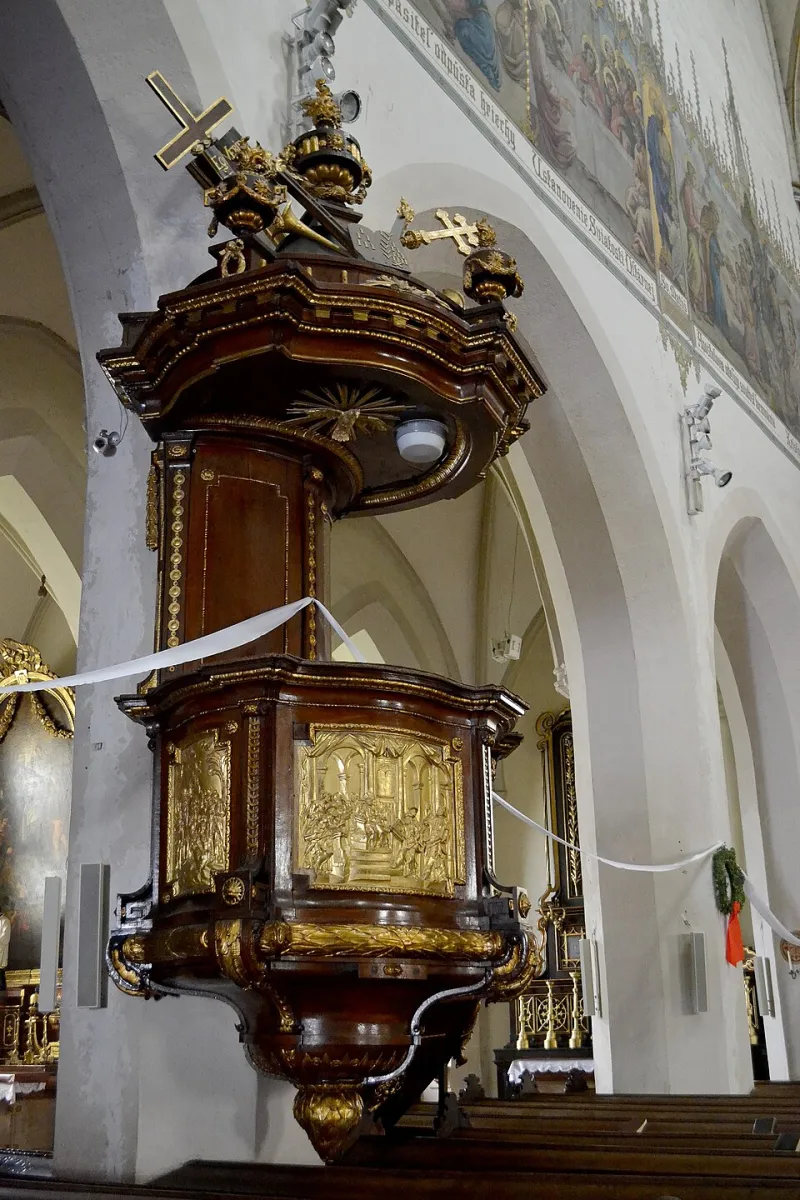
Photo: No machine-readable author provided. Palica assumed (based on copyright claims)., CC BY-SA 3.0, via Wikimedia Commons
If you've ever described Slovak food to an American friend, you probably defaulted to something like "hearty" or "rustic" or, if you were being diplomatic, "filling." And look — that's not wrong. Traditional Slovak cooking was built for cold winters, physical labor, and making the most of whatever the land and the animals provided. It was never trying to be delicate.
But something is happening in Trnava's kitchens right now that's making people rethink the entire premise. A generation of younger chefs, farmers, and food entrepreneurs has decided that honoring Slovak culinary tradition doesn't mean being imprisoned by it — and the results are genuinely turning heads.
The Dish That Started a Conversation
Let's start with bryndzové halušky, because you can't talk about Slovak food without it. This is the national dish: soft potato dumplings, sheep's milk cheese (bryndza), and fried bacon. It's deeply comforting, aggressively savory, and about as subtle as a sledgehammer. Americans who try it for the first time tend to fall into one of two camps — immediate devotion or polite confusion.
Chef Tomáš Valent, who runs a small restaurant near Trnava's old town, has been quietly messing with this formula for the past three years. His version uses bryndza sourced from a single small producer in the Carpathian foothills, swaps the standard bacon for a house-smoked pork belly cured with local herbs, and finishes the dish with a drizzle of brown butter and a scattering of wild chives. It's still recognizably halušky. It's also something else entirely.
"I'm not trying to make French food with Slovak ingredients," Valent explains, wiping his hands on his apron during a brief break between lunch service. "I'm trying to figure out what Slovak food actually wants to be when you treat it with the same care and attention that chefs in Paris or Copenhagen take for granted."
That framing — Slovak food given the same serious treatment as any other serious cuisine — is the philosophical engine driving a lot of what's happening in Trnava right now.
Farm-to-Table, Slovak Style
The farm-to-table movement arrived in Slovakia a little later than it did in, say, Brooklyn or Portland, but it has taken root with a particular intensity in the Trnava region, partly because of geography. The area surrounding the city — the fertile Danubian Lowland — is some of the most productive agricultural land in Central Europe. There are vegetable farms, small-scale livestock operations, orchards, and a growing number of producers making artisanal versions of traditional Slovak products like bryndza, klobása (smoked sausage), and various fermented and cured meats.
Petra Nagyová runs one of the most talked-about catering operations in the city, and her sourcing philosophy is almost obsessive in its localism. "I know the name of every farmer I buy from," she says, pulling a crate of heirloom root vegetables from the back of a delivery van outside her kitchen. "If I can't tell you where something came from, I don't put it on the plate."
Nagyová's menus rotate weekly based on what's available locally, a practice that sounds simple but requires a level of flexibility and creativity that most commercial food operations aren't willing to sustain. Her approach has built a devoted following among Trnava residents who are increasingly interested in eating food that has a traceable story behind it — a shift in consumer attitude that mirrors trends in American food culture but carries its own distinctly Slovak flavor.
The Ingredient Rediscoveries
One of the more fascinating subplots in Trnava's food scene is the active recovery of ingredients and techniques that were nearly lost during the decades of communist-era standardization, when regional food diversity was flattened in favor of industrial uniformity.
Kapustnica — a sour cabbage soup traditionally made with smoked meats and dried mushrooms — is one example of a dish that survived this period but lost much of its regional variation in the process. Younger cooks in Trnava are digging into old cookbooks, talking to grandmothers, and experimenting with fermentation times and ingredient ratios to restore something closer to the pre-industrial versions of these dishes.
"My grandmother made kapustnica a specific way that I couldn't find in any restaurant," says Jana Blahová, who left a marketing career two years ago to open a small food stall at Trnava's weekend market. "I spent about six months just trying to reverse-engineer her recipe. Now it's the thing people come back for every week."
Blahová's stall has become a minor local institution, drawing lines that sometimes stretch halfway down the market lane on Saturday mornings. She's also started teaching occasional cooking workshops, which sell out almost immediately — a sign that the appetite for this kind of culinary archaeology extends well beyond professional kitchens.
What American Food Lovers Should Know
For Americans who travel with their stomachs — and there are a lot of you, which is a compliment — Trnava's evolving food scene offers something genuinely compelling. It's not trying to be a Michelin-star destination (though one or two of the newer spots are quietly pushing in that direction). What it offers instead is the chance to eat food that is deeply rooted in a specific place and culture, prepared by people who care intensely about what they're doing and why.
The price point is also worth mentioning. A full dinner at one of Trnava's better restaurants — the kind of meal that would run you $80 to $120 per person in a comparable American city — will typically cost somewhere between $20 and $40 here. The exchange rate and cost of living differences make eating well in Slovakia an almost unfair bargain by American standards.
If you want a practical starting point, the Saturday market near the old town is as good an introduction to the local food culture as you'll find anywhere. Show up hungry, bring cash, and be prepared to eat things you can't pronounce. That's kind of the whole point.
The Bigger Picture
What's happening in Trnava's kitchens isn't just about food. It's about a generation of Slovaks who are looking at their own cultural inheritance with fresh eyes — deciding what to keep, what to transform, and what to celebrate more loudly than it has been celebrated before. Food is just the most immediate and delicious expression of that process.
Chef Valent puts it simply: "Slovak food has always been good. We're just finally starting to tell that story properly."
Considering how the story tastes right now, we'd say they're off to an excellent start.