Forget Prague: This Tiny Slovak City Is the Baroque Gem American Travelers Keep Missing
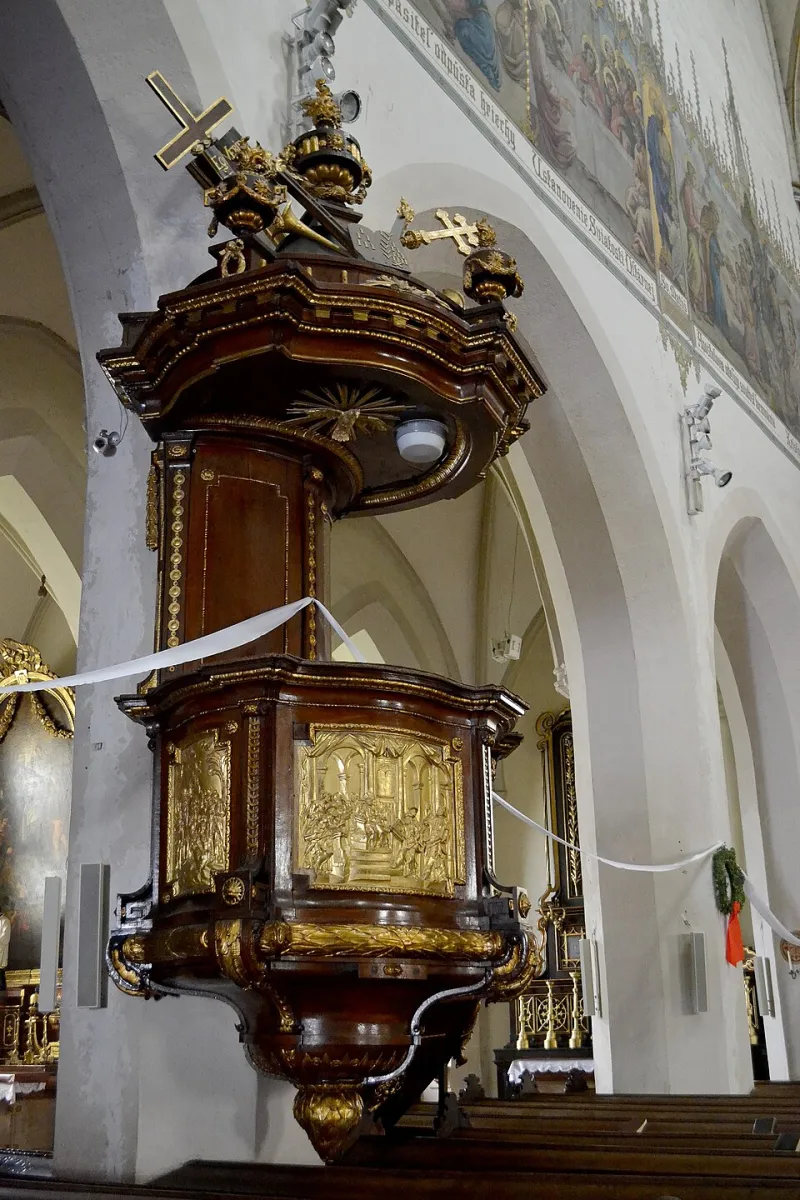
Photo: Ľuboš Repta, CC BY-SA 4.0, via Wikimedia Commons
Most Americans planning a Central European vacation think in three stops: Vienna, Prague, Budapest. Maybe Kraków if they're feeling adventurous. But somewhere in the middle of that well-worn tourist triangle sits a city of roughly 65,000 people that has been quietly shaping the cultural and intellectual identity of this entire region for nearly five centuries — and almost nobody outside of Europe knows its name.
That city is Trnava. And it's kind of a big deal.
The "Slovak Rome" — No, Really
Locals have been calling Trnava the "Slovak Rome" for generations, and the nickname isn't just civic pride talking. Walk through the old town on any given afternoon and you'll count more baroque church towers than you can photograph before your phone battery dies. The city's skyline is a jagged silhouette of spires and domes that feels almost theatrical — like someone commissioned a Hollywood set designer to build a perfect Central European medieval town and then just... left it there.
The most iconic of these is the Cathedral of Saint John the Baptist, a massive baroque structure completed in the 17th century that dominates the main square with the kind of quiet authority that centuries of history tend to produce. Step inside and the gilded altars, frescoed ceilings, and near-perfect acoustics will make you forget, at least briefly, that you were complaining about your carry-on bag two hours ago in Vienna.
But Trnava's religious architecture isn't just pretty backdrop — it's the physical record of a city that served as the seat of the Archbishop of Esztergom for nearly 250 years, from the 16th century onward, after the Ottoman advance forced the Catholic Church to relocate its Hungarian ecclesiastical center northward. For a long stretch of European history, this was one of the most important Catholic cities on the continent. That legacy is literally built into every corner of the old town.
A University Older Than Harvard (Yes, Really)
Here's a fact that tends to stop American visitors cold: Trnava is home to one of the oldest universities in Central Europe. The Universitas Tyrnaviensis was founded in 1635 — a full 21 years before Harvard was even a thought in anyone's mind back in the Massachusetts Bay Colony.
The university was eventually relocated to Budapest in the 18th century and evolved into what is today Eötvös Loránd University, one of Hungary's most prestigious institutions. But Trnava didn't just accept that loss and move on. The city re-established its own university in 1992, and today the University of Trnava is a thriving academic community that gives the city a distinctly youthful, intellectually curious energy — the kind that tends to produce good coffee shops and interesting conversations in equal measure.
"People come here expecting a museum piece," says Marta Horáková, a local art historian and guide who has been leading cultural tours of the city for over a decade. "They leave surprised by how alive it feels. The students, the festivals, the galleries — Trnava is not frozen in time. It's a city that takes its history seriously and then does something with it."
The Arts Scene Nobody Is Talking About
In recent years, Trnava has developed a contemporary arts and culture scene that punches well above its weight for a city its size. The Galéria Jána Koniarka, named after a celebrated Slovak sculptor born in the city, houses an impressive permanent collection alongside rotating exhibitions that regularly feature international artists. For a mid-sized Slovak city, the programming is genuinely ambitious.
The city also hosts the Divadlo na Peróne (Theatre on the Platform), a smaller experimental venue that has become something of a cult favorite among Slovak theater lovers for its willingness to take risks on unconventional productions. If you time your visit right, catching a performance here — even if your Slovak is, generously speaking, nonexistent — is an experience worth the language barrier.
And then there's the annual Trnava Arts Festival, which draws performers, visual artists, and audiences from across Slovakia and beyond each summer, transforming the old town squares into open-air stages and exhibition spaces. Think of it as a smaller, more intimate version of the kind of European cultural festival that typically only gets attention when it happens in a capital city.
Getting There Without Losing Your Mind
Here's the practical part, and it's genuinely good news: Trnava is absurdly easy to reach. The city sits about 45 kilometers northeast of Bratislava, Slovakia's capital, which means you can fly into Vienna (a major international hub with direct flights from dozens of US cities), hop a train or bus to Bratislava in under an hour, and then take another short train ride straight into Trnava's city center. The whole journey from Vienna airport to the Trnava old town can be done in under two hours on a good day.
Alternatively, Bratislava itself has a small international airport with growing connections, and Budapest — about 200 kilometers to the southeast — is another solid entry point for travelers who want to build a broader regional itinerary.
Once you're in Trnava, the old town is almost entirely walkable. Most of the major churches, the old city walls, the main square (Trojičné námestie), and the best restaurants and cafés are within comfortable walking distance of each other. You won't need a car, and you won't need a tour bus. You'll just need comfortable shoes and a willingness to wander.
Why Now?
Trnava is at an interesting inflection point. It's well-known enough among European travelers — particularly Czechs, Austrians, and Hungarians — to have a functioning tourism infrastructure, but not yet so overrun that it has lost the authentic, lived-in quality that makes a place worth visiting in the first place. The cafés are still mostly full of locals. The souvenir shops haven't taken over the main square. A well-priced guesthouse in the old town is still a realistic expectation rather than a fantasy.
For American travelers who have done the major European capitals and are looking for something that feels genuinely different — somewhere with real history, real culture, and real people going about their real lives — Trnava is exactly the kind of place that tends to become the highlight of a trip in retrospect.
"Every time someone tells me they almost skipped Trnava," says Horáková, laughing, "I tell them the same thing: the people who skip it are the ones who regret it most."
She's probably right. Do yourself a favor and don't be one of them.