Things That Go Bump in the Baroque: The Ghost Stories Trnava Locals Actually Believe
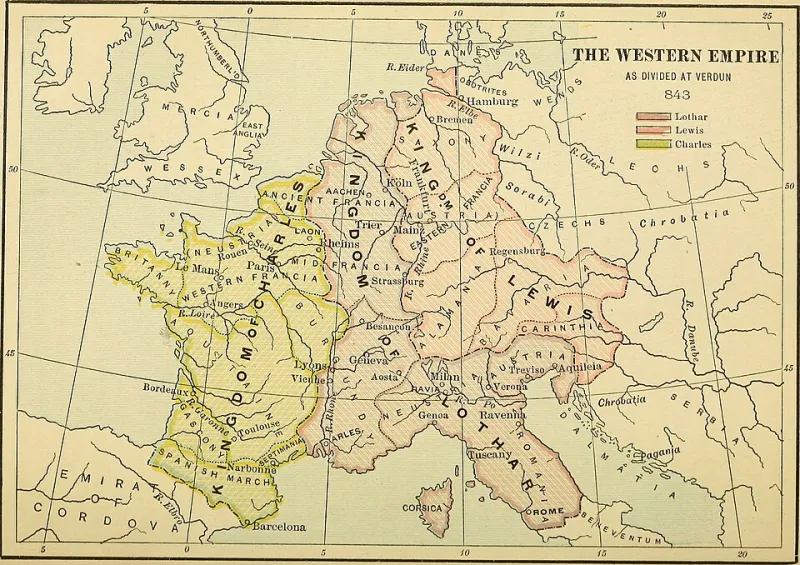
Photo: Internet Archive Book Images, No restrictions, via Wikimedia Commons
There's a moment, usually somewhere around ten o'clock on a foggy autumn evening, when Trnava stops looking like a charming Central European city and starts looking like a place where something definitely happened once. The lanterns along Hlavná ulica cast long shadows over walls that have been standing since the 1200s. The cathedral bells do their thing. And if you're walking alone past the old city gates, it's genuinely not hard to understand why this place has been generating ghost stories for about eight centuries.
Trnava is Slovakia's oldest royal chartered town, which sounds like a dry historical footnote until you realize it means the city has had more time than almost anywhere else in the region to accumulate its dead, its tragedies, and its legends. For travelers coming from the United States — where a building from 1890 counts as ancient — the sheer density of layered history here can feel almost hallucinatory. Every alley has a story. Some of those stories involve people who never quite left.
The White Lady of the City Walls
Ask almost any Trnava local of a certain age about the city's most persistent ghost, and you'll hear about a woman in white seen walking along the remnants of the medieval fortification walls, particularly near the sections that survive close to the old Franciscan complex. The legend varies depending on who's telling it — she's a noblewoman, or a bride who died before her wedding, or a plague victim who refused to go quietly — but the visual is always the same: pale dress, slow movement, and a habit of vanishing the moment anyone gets close.
Martin Blaho, a local historian who's spent years documenting Trnava's oral traditions, says the White Lady stories almost certainly have real roots. "The city walls saw a tremendous amount of violence and death over the centuries," he explains. "Trnava was a significant administrative and religious center during the Ottoman occupation of much of Hungary. People fled here. People also died here. It would be strange if the city didn't have ghost stories."
The Ottoman-era context is one American visitors often overlook. While Western Europe was doing the Renaissance thing, much of Central Europe was either under Ottoman control or constantly bracing for it. Trnava, which served as a kind of ecclesiastical capital for the region when the Ottomans held Budapest, absorbed waves of refugees, clergy, administrators, and soldiers. The city's walls weren't decorative — they were the difference between survival and catastrophe.
The Archbishop's Palace and Its Restless Resident
If Trnava has a building that earns its haunted reputation on architectural merit alone, it's the Archbishop's Palace on Námestie Jána Pazmáňa. The structure has been rebuilt and repurposed so many times over the centuries that it feels less like a single building and more like a palimpsest — layer on top of layer on top of layer.
Local tour guide Zuzana Kováčová, who runs evening historical walks through the city center, says the palace generates more questions from visitors than almost anywhere else. "People feel something there," she says with a slight smile that suggests she's not entirely dismissing the feeling. "I tell them the history — the religious politics, the powerful figures who lived and died within those walls — and you can see them making the connection. History that intense leaves a mark."
The most commonly cited legend involves a former church official whose ambitions outpaced his ethics — a story that, in its broad strokes, could apply to about half the powerful men in European history, which is probably why it's stuck. The specifics shift with the telling, but the throughline is consistent: someone who accumulated too much power, made too many enemies, and whose restlessness is still occasionally felt in the upper corridors on cold nights.
What the Plague Left Behind
No honest account of Trnava's ghost lore can skip the plague years, and there were several of them. Bubonic plague hit the city in waves across the 16th and 17th centuries, and the death tolls were catastrophic by any measure. Mass graves were not uncommon. The trauma embedded itself into the city's collective memory in ways that are still visible — in the plague columns erected in thanksgiving for the city's eventual survival, and in the quieter, stranger stories that circulate about certain parts of the old town.
There's a persistent local belief that the area near one of the older cemeteries — now largely built over — is particularly active. Residents of adjacent buildings report sounds without sources. The rational explanations (old stone structures, temperature differentials, centuries of settling) satisfy some people. Others remain unconvinced.
"I'm not going to tell you I've seen a ghost," says Petra, a woman in her sixties who has lived near the old town center her entire life. "But I'll tell you my grandmother didn't walk through certain places at night, and her grandmother didn't either. That's not nothing."
Why This Matters for Travelers
Here's the thing about Trnava's ghost stories that makes them genuinely interesting beyond the spooky surface appeal: they're a remarkably effective delivery mechanism for real history. The legends encode the plague, the Ottoman wars, the religious power struggles, the social hierarchies of medieval Central Europe — all of it wrapped in a narrative that's actually memorable.
For American travelers who find traditional museum-style history presentations a little dry, Trnava's paranormal folklore offers a different entry point into an extraordinarily rich past. The city doesn't have the tourist infrastructure of Prague or Vienna, which means the stories feel less packaged, less performed. The locals telling them often actually believe them, or at least believe in the history underneath them, which gives the whole experience a texture you can't manufacture.
Zuzana's evening walking tours operate seasonally and cover both the documented history and the oral traditions without treating either as more important than the other. "The ghost stories are the history," she says. "They're just told in a different language."
Trnava in autumn, when the fog comes in off the surrounding plains and the tourist crowds have thinned out, is about as close as you'll get to genuinely atmospheric Central European travel. The ghosts, real or imagined, are included in the price of admission.