Spray Cans and Soviet Concrete: How Trnava's Street Artists Are Rewriting the City's Walls
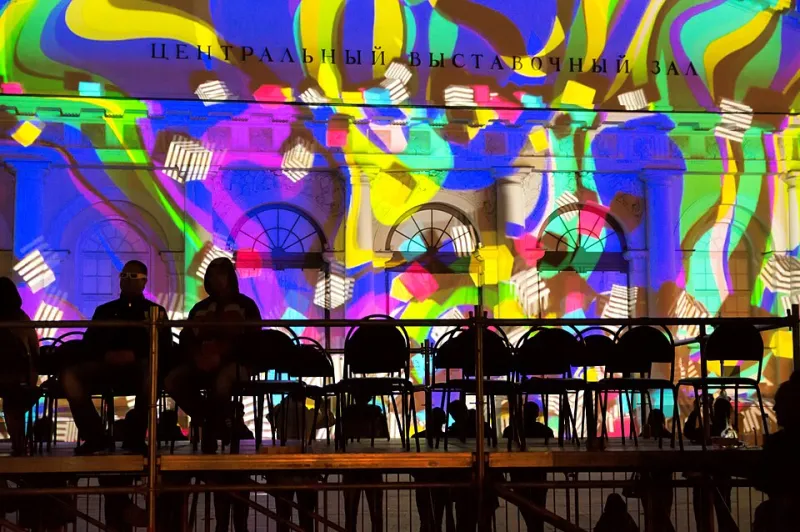
Photo: Vyacheslav Argenberg, CC BY 4.0, via Wikimedia Commons
Walk through the older residential districts of Trnava on any given morning and you might catch a whiff of aerosol paint drifting between the brutalist housing blocks — the panelák buildings that Soviet urban planners left behind like concrete stamps across Central Europe. But instead of faded gray walls and peeling government-era paint, you're increasingly likely to turn a corner and find yourself face-to-face with a massive, vividly detailed mural stretching five stories into the Slovak sky.
Trnava's street art scene isn't exactly new. But in the last three or four years, something has shifted. What used to be scattered tags and the occasional commissioned piece has grown into something more organized, more ambitious, and frankly more stunning. The city is starting to look like an open-air gallery — and the artists behind it are locals who aren't going anywhere.
The Walls That Needed a Story
To understand why street art is finding such fertile ground in Trnava, you have to understand the architecture it's working with. The panelák blocks that line the city's outer neighborhoods were built fast and built cheap during the communist era, prioritizing function over anything resembling beauty. They're not exactly ugly in a dramatic way — they're just relentlessly beige, endlessly repetitive, and completely anonymous.
For residents who grew up in these neighborhoods, that anonymity carries a complicated emotional weight. It's home, but it's also a reminder of a political system that didn't much care about individual expression. Street art, in that context, isn't just decoration. It's a kind of reclamation.
"These walls have been waiting for a voice," says Marek, a 29-year-old Trnava-based muralist who asked to go by his tag name, Mako. "When I paint something on a building where people actually live, it changes the relationship people have with that space. Suddenly the wall is theirs." Mako has completed more than a dozen large-scale pieces across the city in the past two years, ranging from photorealistic portraits of elderly Trnava residents to abstract compositions that play with Slovak folk motifs in a decidedly modern way.
From Vandalism to Vision: How the City Got On Board
Not long ago, the conversation between street artists and city officials in most Slovak towns went something like: stop doing that. Trnava hasn't completely flipped that script — unauthorized work still happens, and not everyone at city hall is a fan — but there's been a meaningful shift toward collaboration.
Several murals now dotting the city were commissioned through partnerships between local cultural organizations and property owners who wanted something better than blank concrete. The annual Colours of Trnava initiative, which brings together local and international artists for a concentrated burst of public art creation each summer, has helped legitimize the scene in ways that pure grassroots energy couldn't have done alone.
For American visitors used to cities like Philadelphia or Detroit, where public art programs have become central to urban revitalization narratives, the Trnava model might feel familiar — but with a distinctly Slovak flavor. The imagery here isn't generic. It pulls from local history, from the region's winemaking tradition, from Slovak mythology, and from the faces of people who actually live in these neighborhoods.
The Artists You Should Know
Beyond Mako, a handful of other Trnava-area artists are doing work worth seeking out.
Lenka Vargová, who splits her time between Trnava and Bratislava, works primarily in large-scale botanical imagery — enormous flowering plants that seem to grow directly out of cracked concrete. Her most talked-about piece, on the side of a block near the city's eastern edge, depicts a sprawling vine of Slovak wildflowers in colors so saturated they almost look backlit. "I want people to feel like nature is pushing back through the city," she's said in interviews. "Like the concrete was always temporary."
Then there's the duo known as Dve Ruky (Slovak for "Two Hands"), who focus on community-engaged work. Before painting, they spend weeks interviewing residents of the building they're working on, collecting stories, photographs, and memories. The final mural becomes a kind of visual biography of the people who live behind the wall. It's a process that takes months, and the results are quietly extraordinary.
What Makes Trnava Different From the Big Names
Lisbon has its azulejo tiles and its Instagram-famous Mouraria murals. Berlin has an entire cultural mythology built around its walls. Even Bratislava, just 45 minutes up the road, has a more established reputation for alternative art scenes. So what's Trnava's angle?
Honestly? Authenticity — and the lack of a tourism industry sophisticated enough to have commodified it yet.
When you wander through Trnava's neighborhoods looking at street art, you're not following a map sold at a gift shop. You're just walking, getting a little lost, and stumbling onto things. The murals aren't yet landmarks with QR codes and guided tour stops. They're just there, part of the city's texture, being discovered by people who happen to look up.
For travelers from the US who are tired of experiences that feel pre-packaged and performative, that's genuinely refreshing. Europe has no shortage of cities where the "authentic" neighborhood has been thoroughly gentrified and photographed into something self-conscious. Trnava's street art scene hasn't reached that point. It still feels like something happening, not something curated.
How to See It For Yourself
If you're visiting Trnava and want to explore the street art scene, the best approach is low-tech: walk. Start in the Linčianska or Prednádražie neighborhoods and give yourself a few hours with no particular agenda. The Old Town has its Baroque charm — and it's genuinely gorgeous — but the street art lives in the residential zones where the city's everyday life actually unfolds.
The summer months are the best time to catch artists actually working. Bring comfortable shoes and a decent camera. And if you see someone with a spray can and a scaffold, don't be shy about saying hello. Trnava's art community is small and genuinely welcoming to curious visitors, especially ones who show up with actual interest rather than just wanting a photo for Instagram.
The walls here have been waiting a long time for someone to pay attention. They've got a lot to say.