From Phở to Falafel: How Immigrant Kitchens Are Quietly Reinventing What Trnava Eats
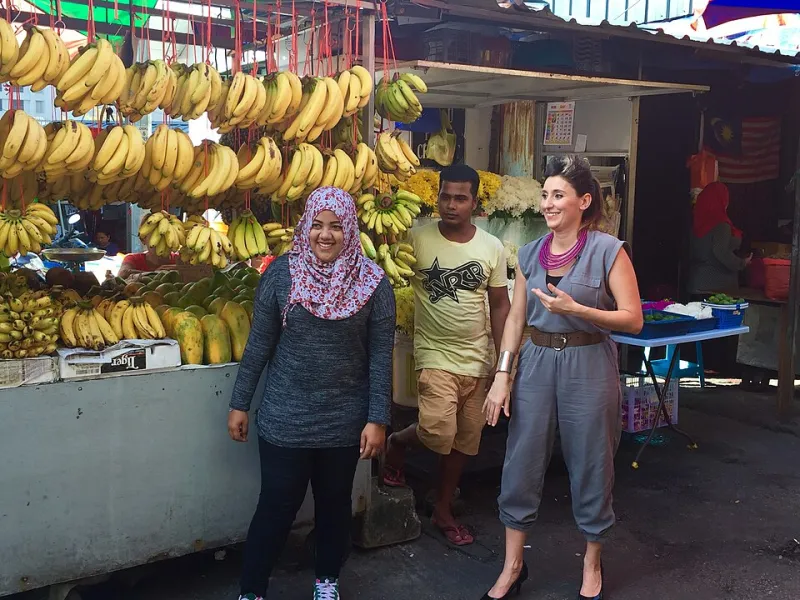
Photo: Uncanned Productions, CC BY-SA 4.0, via Wikimedia Commons
On a Tuesday evening in Trnava, a line is forming outside a small Vietnamese restaurant tucked into a residential street a few blocks from the old city walls. The crowd is a mix of university students, middle-aged couples, and a table of older men who look like they've been coming here long enough to have opinions about the broth. Inside, the owner — a Vietnamese woman who moved to Slovakia over two decades ago — is directing traffic between the kitchen and the dining room with the efficient calm of someone who has been doing this for a very long time.
This scene, unremarkable in New York or Chicago, is quietly extraordinary in Trnava. For most of its history, this city of roughly 65,000 people has been about as culinarily Slovak as it gets — dumplings, roast pork, cabbage soup, the occasional schnitzel borrowed from next-door Austria. Good food, hearty food, food that makes sense in a cold climate. But not exactly food that surprises you.
That's changing. And the people changing it are immigrants who arrived in Slovakia for various reasons, put down roots in Trnava specifically, and eventually did what people with cooking in their blood tend to do: they opened something.
The Vietnamese Foundation
If there's a vanguard to Trnava's immigrant food scene, it's the Vietnamese community — one of the oldest and most established immigrant groups in Slovakia, with roots going back to labor agreements between communist Czechoslovakia and Vietnam in the 1980s. Many of those original workers stayed, raised children, and built businesses. The food followed.
"My parents came here with nothing," says Linh Nguyenová, who helps run her family's restaurant and also operates a small import grocery nearby. "They learned Slovak. They figured out what locals liked. But they also never stopped cooking the way they cook at home. At first, Slovaks were suspicious. Now they come twice a week."
The restaurant serves a menu that navigates carefully between accessibility and authenticity — pho that uses a broth her mother has been perfecting for fifteen years, spring rolls that locals have adopted as casual takeout food, and a grilled pork dish that has developed something of a cult following among the university crowd. It's not fusion in the trendy, Instagram-ready sense. It's just good Vietnamese food that has found its audience through patience and consistency.
New Arrivals, New Flavors
The Vietnamese community may have laid the groundwork, but Trnava's immigrant food landscape has diversified considerably in the last decade. A Lebanese family runs a small spot near the train station that does a roaring lunch trade in shawarma and falafel wraps — the kind of fast, cheap, actually-good food that any city needs more of. A Pakistani-owned restaurant on a quieter side street has become a go-to for locals who have developed a taste for karahi and biryani, often after a student from the city's university brought a Slovak roommate along for the first time.
"The first customers were always other immigrants," admits Khalid, who opened his restaurant four years ago after years of cooking for friends and extended family. "Then students. Then the students brought their parents. Now I have retired Slovak couples who come every Friday for lamb."
That word-of-mouth trajectory — immigrant community, then students, then everyone else — appears to be a consistent pattern across Trnava's newer food establishments. The city's university population acts as a kind of cultural accelerant, more adventurous and internationally minded than the broader population, and willing to evangelize for a good meal.
What Locals Are Actually Saying
It would be easy to paint this as a story of frictionless multicultural harmony, but the reality is more textured. Slovakia has its share of nationalist politics and cultural anxiety around immigration, and Trnava is not immune to those currents. Some residents express ambivalence about the changes, particularly older generations who associate the city's identity closely with its Slovak Catholic heritage.
But at the level of actual food — of what people are choosing to eat when they go out — the picture is striking. The Vietnamese restaurant is full on a Tuesday. The shawarma spot has a line at noon. The Pakistani restaurant's Friday lamb has regulars.
"People are sometimes more open with their stomachs than with their opinions," observes food writer and Trnava native Zuzana Hudáková, who has been documenting the city's changing food scene for several years. "I've watched people who would tell you they're skeptical of immigration sit down and eat a bowl of pho and just... let it be good. Food is a very honest form of cultural exchange."
Fusion Happening Naturally
Perhaps the most interesting development in Trnava's food evolution is what happens when immigrant cooks start riffing on local ingredients. A Vietnamese-run catering operation has started incorporating locally foraged mushrooms into traditional dishes. A Lebanese baker has begun experimenting with Slovak grain varieties in his flatbread. These aren't marketing gimmicks — they're the natural result of cooks working with what's available and good in their region.
"I use local everything when I can," says Linh. "The pork here is excellent. The mushrooms are incredible. Why would I not use them?"
This kind of organic fusion — not the celebrity-chef, press-release kind, but the practical, daily kind that happens when skilled cooks engage seriously with their local environment — is exactly how regional food cultures have always evolved. Central European cuisine is itself a centuries-long conversation between Slovak, Hungarian, Austrian, and Jewish traditions. The new voices joining that conversation are just the latest chapter.
A Taste of What's Coming
For visitors from the US, where immigrant food has long been understood as one of the great engines of American culinary culture, Trnava's evolving food scene will feel both familiar and freshly exciting. The specific combination — Slovak dumplings and Vietnamese pho and Lebanese falafel and Pakistani karahi, all within walking distance of a 17th-century cathedral — is genuinely unlike anything you'll find anywhere else.
And unlike the self-conscious "food hall" developments that have tried to manufacture this kind of diversity in American cities, Trnava's version emerged organically, driven by real people cooking real food for real neighbors. That's not a small thing.
Next time you're in the region, skip the tourist-menu goulash and follow the line of students to that Vietnamese spot by the old city walls. The broth has been going for fifteen years. It shows.