Babička Goes Viral: Meet the Trnava Grandmothers Who Accidentally Became Food Influencers
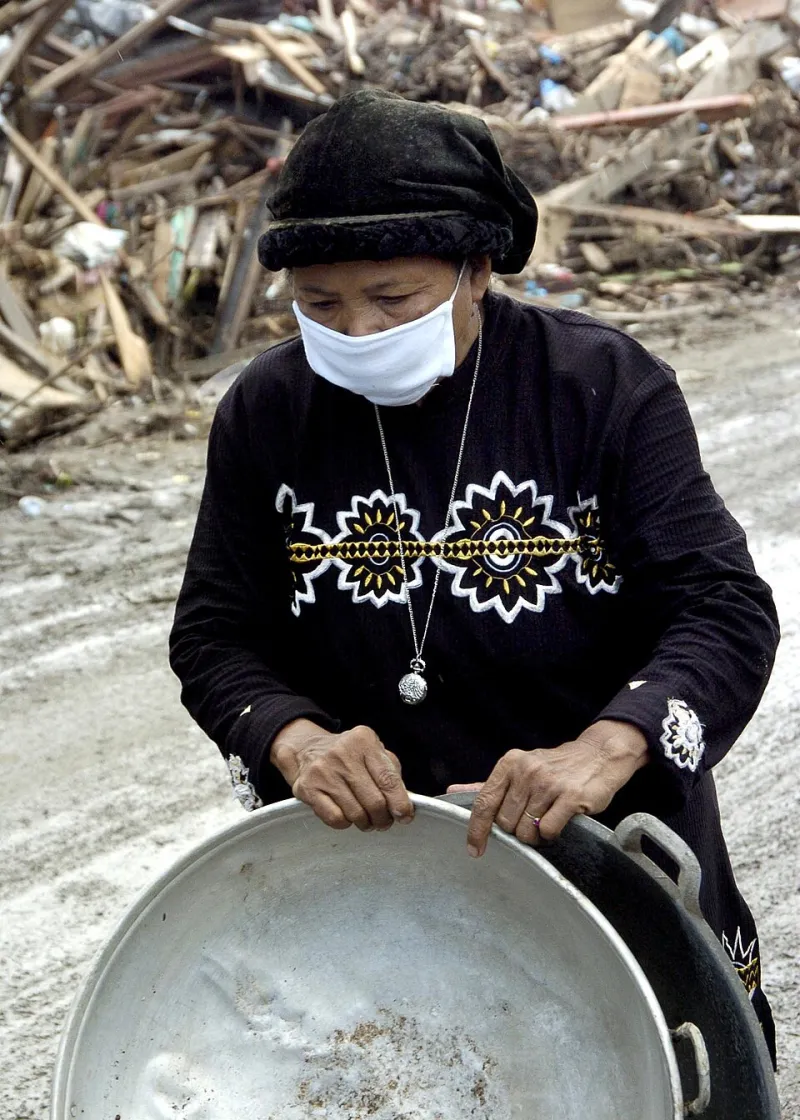
Photo: U.S. Navy photo by Photographer's Mate 3rd Class Tyler J. Clements, Public domain, via Wikimedia Commons
Mária Horáková is seventy-three years old, has been making svíčková sauce from memory since she was nineteen, and recently received a comment on her cooking video from someone in Auckland, New Zealand, who called her content "genuinely life-changing." She had to have her granddaughter translate the English for her. She responded with a thumbs-up emoji and then went back to her kitchen.
This is, more or less, how it goes with Trnava's emerging class of accidental food influencers. The city's babičky — the Slovak word for grandmothers, pronounced roughly "bah-beach-kee" and carrying approximately a thousand years of cultural weight — are finding audiences they never anticipated, sharing techniques they never thought to document, and becoming unlikely bridges between Slovak culinary heritage and a global digital audience that can't seem to get enough of them.
How It Started (Usually By Accident)
The origin story is almost always some version of the same thing: a grandchild, home for a holiday, pulls out a phone to record something that seems mundane to the family but extraordinary to everyone else. The grandmother rolling dough in a specific way she learned from her own grandmother. The particular motion used to shape bryndzové halušky. The way a certain soup is built from scratch in a way that no recipe fully captures.
"I filmed my grandmother because I was scared I'd forget how she does it," says Katarína, a twenty-six-year-old Trnava native who now manages a modest but growing social media presence for her grandmother, Ružena. "I put it online mostly for my cousins who live in Bratislava. Then other people started watching."
Ružena's videos — shot on Katarína's phone, in the kitchen of the family's apartment near the city center, with zero production value and maximum authenticity — now pull in consistent viewership from Slovak diaspora communities in the US, Canada, and Australia, as well as a surprising number of non-Slovak food enthusiasts who stumbled across the content and stayed.
The comments section is a genuinely moving place. "My babička used to make this" appears in roughly a hundred variations across dozens of languages. Food, it turns out, is an extremely efficient vehicle for collective nostalgia.
The Techniques That Can't Be Googled
What makes these videos compelling isn't just the emotional resonance — it's that the grandmothers are often demonstrating techniques that genuinely don't exist in written form anywhere. Slovak home cooking, particularly the regional variations specific to the Trnava area, was transmitted orally and physically for generations. You learned by standing next to someone and watching. The knowledge lived in hands, not in cookbooks.
"My grandmother makes kapustnica in a way I've never seen in any recipe," says Tomáš, whose grandmother Božena has become something of a minor celebrity in certain Slovak food circles online. "The proportions, the order of things, when she adds the mushrooms — she can't fully explain it, she just knows. But you can watch her do it and try to understand."
This is actually a significant cultural preservation issue dressed up in social media clothes. Ethnographers and food historians have long worried about the loss of hyperlocal culinary knowledge as the generation that holds it ages. The babička influencer phenomenon, however accidental, is functioning as a kind of crowdsourced archive. The internet is preserving things that academic institutions haven't gotten around to documenting.
Jana Slobodová, who teaches cultural studies at a Trnava-area institution and has been watching the trend with professional interest, puts it plainly: "These videos are primary sources. Fifty years from now, food historians are going to be very grateful for them."
The Grandmothers Themselves
Spend any time talking to the women at the center of this phenomenon and a few things become immediately clear. First, they are uniformly unbothered by their own fame. Second, they have opinions about food that they will share with you at length and without prompting. Third, they find the whole social media apparatus somewhere between baffling and mildly amusing.
Mária, the seventy-three-year-old svíčková specialist, is aware that people watch her videos but doesn't fully grasp the scale of it. "My granddaughter shows me sometimes," she says. "There are a lot of comments. I don't understand most of them but people seem to be happy, so good." She pauses. "The sauce is good. Of course they're happy."
Ružena, who is sixty-eight and has a sharper sense of the online world thanks to Katarína's patient explanations, has developed a genuine if bemused relationship with her audience. She occasionally asks Katarína to respond to specific questions — usually from people asking about substitutions or modifications. Her answers are consistent and uncompromising: "Tell them not to change it."
Božena, at seventy-one, is the most technologically engaged of the group, having acquired her own tablet specifically to watch other cooking videos. Her verdict on contemporary food content is delivered with the confidence of someone who has been right about food for five decades: "Too much decoration. Not enough flavor."
Why American Audiences Are Hooked
From a US perspective, the appeal of this content makes a certain kind of intuitive sense. American food culture has spent the last decade oscillating between extreme optimization — meal kits, macros, efficiency — and a deep hunger for something that feels rooted and real. The babička videos offer exactly that. There's no ring light. No branded cutting board. No sponsored segment. Just an older woman in a practical apron making something she's made a thousand times, in a kitchen that looks genuinely lived in.
It hits the same nerve as the best episodes of a certain kind of travel food documentary — the ones where the host eats in someone's home rather than a restaurant, and the meal is extraordinary precisely because it wasn't designed to be.
The Slovak diaspora in the US, which is larger than most Americans realize, has responded with particular intensity. For second- and third-generation Slovak Americans, the videos function as a kind of culinary homecoming. Comments like "this is exactly how my baba made it" show up constantly, often followed by long threads of people sharing their own family variations.
What Comes Next
Katarína is careful not to over-commercialize Ružena's presence online, and the other families involved seem to share that instinct. The authenticity of the content is clearly its primary value, and everyone involved seems to understand, at least intuitively, that the moment it starts feeling like a brand, something important gets lost.
For now, the babičky keep cooking. The grandchildren keep filming. The internet keeps watching. And somewhere in Trnava, Mária Horáková is probably making svíčková sauce right now, entirely unconcerned with her analytics, confident in the knowledge that she's been doing this correctly since before most of her viewers were born.
She's not wrong.