Stubbornly Local: Why Trnava Refuses to Look Like Every Other European City
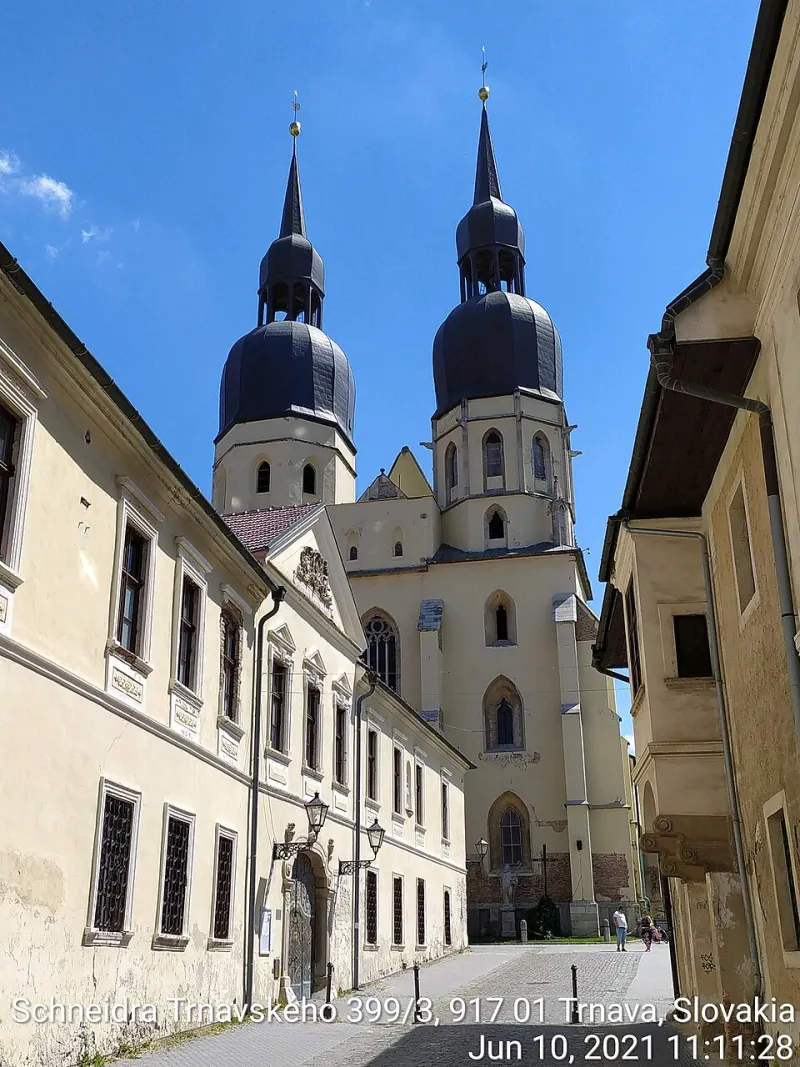
Photo: Szombat78, CC0, via Wikimedia Commons
Walk through the center of almost any mid-sized European city these days and you'll get a familiar sinking feeling. The same H&M. The same Starbucks. The same cobblestones, freshly pressure-washed, lined with franchise restaurants serving approximations of local food. It's a kind of cultural flattening that has quietly erased the personality from dozens of once-distinctive places across the continent.
Then there's Trnava.
This compact baroque city in western Slovakia — about 30 miles northeast of Bratislava — has somehow held the line. Its old town still smells like fresh bread from family-run bakeries, not cinnamon syrup from a global chain. Its side streets are still cluttered with independent shops that have been in the same families for decades. And if you ask locals why, they'll give you an answer that sounds almost defiant: because we didn't let it happen.
The City That Said 'No, Thanks'
Trnava's resistance to homogenization isn't entirely accidental — but it's also not the result of some master plan drawn up in a city hall conference room. It's messier and more human than that.
"There were moments in the early 2000s when the pressure was real," says Marta Kováčová, who has run a small fabric and notions shop just off Hlavná Street for over 25 years. "Developers were circling. There were proposals for a big shopping complex right on the edge of the historic center. People organized. People showed up to meetings. It was not glamorous, but it worked."
That kind of grassroots friction — residents showing up, making noise, refusing to sign off on proposals that would have handed the city's commercial identity to outside investors — has been a recurring theme in Trnava's recent history. It's not that the city is anti-progress. It's that locals have developed a fairly sharp instinct for distinguishing between development that serves them and development that simply uses them as a backdrop.
Urban planner Tomáš Blaho, who has worked with the city on several preservation-adjacent projects, puts it more technically but arrives at the same place. "Zoning here has historically protected mixed-use, small-footprint commercial spaces in the center," he explains. "When you make it structurally difficult to build a 10,000-square-foot retail box in the old town, you're essentially preserving the conditions that allow small businesses to survive. It's not romantic — it's just good urban policy."
What 'Authentic' Actually Looks Like
For American visitors accustomed to thinking of European cities as interchangeable backdrops for vacation photos, Trnava can feel genuinely disorienting — in the best way. The city's main square, námestie Svätej Trojice, is surrounded by buildings that have been repaired and repainted rather than replaced. The café you duck into for an espresso is probably owned by the person making your coffee. The bookstore around the corner has opinions about what it stocks.
This isn't museum-piece preservation, either. Trnava is a living city with a university, a professional soccer club, and a population that skews younger than you might expect. The weirdness isn't curated — it accumulates naturally when a place hasn't been scrubbed clean by corporate investment.
Ján Sloboda, who opened a vinyl record shop in the city about eight years ago, describes it with the kind of shrug that suggests he's thought about this more than he lets on. "I could not have opened this shop in Bratislava. The rents would have killed me in six months. Here, I have regulars. I have neighbors who send me customers. The city has a metabolism that still allows for something small to survive and grow."
That metabolism — the economic and social conditions that let a record shop or a fabric store or a tiny wine bar actually make rent — is precisely what gets destroyed when a city goes generic. Once the anchor chains move in and rents spike, the Jáns of the world get pushed out, and with them goes the texture that made the place worth visiting in the first place.
What American Cities Could Learn
It would be easy to romanticize all of this, and we should be careful not to. Trnava has its share of struggles — youth unemployment, brain drain to larger cities, the constant tension between preserving character and allowing for growth. The city isn't a utopia. It's just a place that has made some choices, consistently, over time, that add up to something meaningful.
For American cities watching their own downtowns get hollowed out by the same forces — chains replacing independents, developers buying up blocks and sitting on them, neighborhoods losing the friction and surprise that made them interesting — there are some transferable lessons here.
Zoning matters. Community engagement matters. The decision to show up to a city planning meeting and argue for keeping the building heights low and the storefront sizes small is not a trivial act. It compounds over decades into something that looks, from the outside, like magic but is actually just sustained civic stubbornness.
"People always ask me what the secret is," says Kováčová, straightening a bolt of linen near her shop window. "There is no secret. You just have to care enough to be annoying about it for a very long time."
Honestly? That tracks. And if you want to see what 25 years of being annoying about it looks like in practice, Trnava is about 90 minutes from Vienna by train. Go before it gets discovered.