Threads Across Time: How Trnava's Bobbin Lace Grandmasters Are Winning Over a Generation Raised on Screens
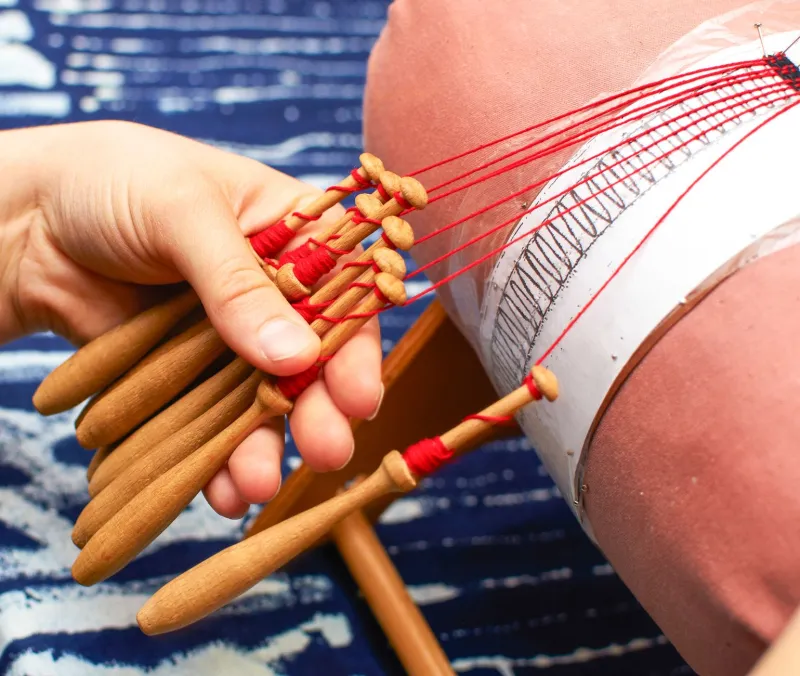
Walk into the right workshop in Trnava on a Tuesday afternoon and you might do a double-take. Seated alongside white-haired women with decades of muscle memory in their fingers, you'll find teenagers and twenty-somethings hunched over lace pillows, moving wooden bobbins with the kind of focused intensity most people reserve for a final exam. Nobody's checking Instagram. Nobody's half-watching a YouTube video. They're just... making lace. And they look completely at peace.
It sounds almost countercultural. In 2024, it kind of is.
An 800-Year Thread
Bobbin lace — known in Slovak as paličkovaná čipka — has roots in Central Europe stretching back to at least the 13th century. The technique involves interlacing dozens, sometimes hundreds, of thread-wound bobbins in precise crossing and twisting patterns over a padded pillow, guided by pins and paper patterns called pricking cards. The result is a textile so intricate it almost doesn't look real. More like geometry dreamed up by someone who had all the time in the world.
Slovakia, and the Trnava region specifically, developed its own distinct visual language within this tradition — floral motifs, geometric borders, and delicate figurative scenes that reflected local culture and Catholic devotional life. For centuries, lace was currency. It adorned church altars, aristocratic collars, and bridal trousseaus. It was a skill passed from grandmother to granddaughter like a family heirloom made of air and patience.
Then the 20th century arrived, brought factories and synthetic fabrics, and the craft nearly vanished.
The Women Who Refused to Let It Die
A small but fiercely dedicated community of master lace makers in and around Trnava kept the tradition breathing through the lean decades. Women like 71-year-old Marta Kováčová, who learned from her own grandmother at age eight and has been teaching ever since, became living archives of a disappearing knowledge. They organized workshops, documented patterns, lobbied for cultural preservation funding, and kept showing up — even when students were scarce and interest felt like it was evaporating.
"There were years when I wondered if I was the last one," Marta admits, her hands never stopping their work as she talks. "But I kept thinking — if I stop teaching, it really is over. So I didn't stop."
Her stubbornness, shared by a handful of other masters across the region, is now paying off in ways she never quite expected.
Gen Z Picks Up the Bobbins
Something shifted in the last five or six years. Maybe it was the pandemic, which sent people searching for tactile, offline activities with tangible results. Maybe it's the broader cultural fatigue with digital everything — the desire to make something you can actually hold. Maybe it's the slow-living movement, which has been quietly gaining traction among younger Europeans who grew up watching their parents burn out chasing productivity.
Whatever the reason, Trnava's lace workshops started filling up with a demographic nobody anticipated: people under 30.
Klára, a 24-year-old graphic design student, started learning bobbin lace eighteen months ago after stumbling across a workshop listing online. She describes the experience as almost therapeutic. "I spend all day staring at screens, making things that exist only digitally," she says. "When I make lace, I can see every single decision I made. Every crossing, every twist. It's completely honest work."
That sentiment comes up again and again among younger practitioners. There's something about the craft's unforgiving precision — you cannot fake your way through a lace pattern; every mistake is permanently woven in — that feels meaningful rather than stressful. In a world of infinite edits and easy deletions, permanence turns out to be its own kind of reward.
Old Patterns, New Vision
What's particularly exciting about this generational handoff is that the newcomers aren't just preserving tradition — they're actively pushing it into new territory. Several young lace makers in Trnava have begun experimenting with contemporary design, incorporating traditional Slovak motifs into jewelry, wall art, fashion accessories, and even home décor objects that would look entirely at home in a Brooklyn boutique or an Etsy shop with a six-week wait list.
One small collective, operating out of a shared studio space near the old city walls, has been producing limited-edition lace pieces that blend historical patterns with minimalist modern framing. Their work has found buyers in Germany, the Netherlands, Japan, and the United States — customers who may know nothing about Slovak cultural heritage but recognize immediately that they're looking at something extraordinary.
"We're not trying to make lace look trendy," explains Tomáš, one of the collective's younger members, who came to the craft through his grandmother and now treats it as his primary creative practice. "We're trying to make it look like what it actually is — which is one of the most technically demanding and visually stunning art forms in Europe. People just didn't know about it."
A Craft That Teaches You How to Think
The masters who've been doing this for decades talk about lace making in almost philosophical terms. It requires the ability to hold a complex pattern in your mind while executing dozens of simultaneous small decisions. It demands patience that our attention-economy culture actively discourages. And it rewards a kind of quiet, sustained focus that feels increasingly rare — and increasingly valuable.
Marta puts it simply: "Lace teaches you that some things cannot be rushed. You can't shortcut it. You can't multitask. You just have to be there, completely, for as long as it takes."
For a generation that grew up being told that speed and efficiency are virtues above all others, that message is landing differently than anyone might have predicted. Slowly, and then all at once.
Where to See It Yourself
If you're visiting Trnava — and honestly, you should be — the city's cultural calendar regularly includes lace-making demonstrations and workshops, particularly around major festivals and market events. The regional ethnographic museum carries examples of historical Slovak lace that are genuinely jaw-dropping up close. And if you want to try your hand at it, introductory workshops do occasionally open to visitors, though spots fill quickly.
Bring patience. Leave your phone in your pocket. And prepare to be humbled by something that looks simple until the moment you realize it absolutely is not.
The last keepers of the lace are still here — and they've got apprentices now. The thread, it turns out, holds.