Holy Bass: Inside Trnava's Wildest Experiment — Techno Nights in Sacred Spaces
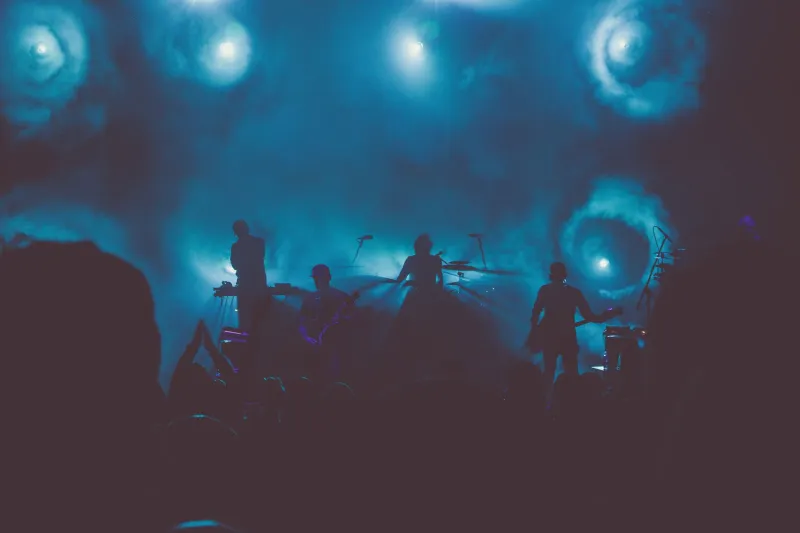
It's past eleven on a Friday when the crowd starts filing through a narrow arched doorway off one of Trnava's older side streets. There's no neon sign, no bouncer in a puffy jacket, no velvet rope. Just a hand-typed flyer pinned near the entrance and the faint, unmistakable thump of sub-bass seeping through walls that were mortared together sometime in the seventeenth century.
Welcome to what locals have started calling svätý zvuk — holy sound. And whether you find it blasphemous or borderline transcendent probably says a lot about which generation you belong to.
The Space Between the Pews
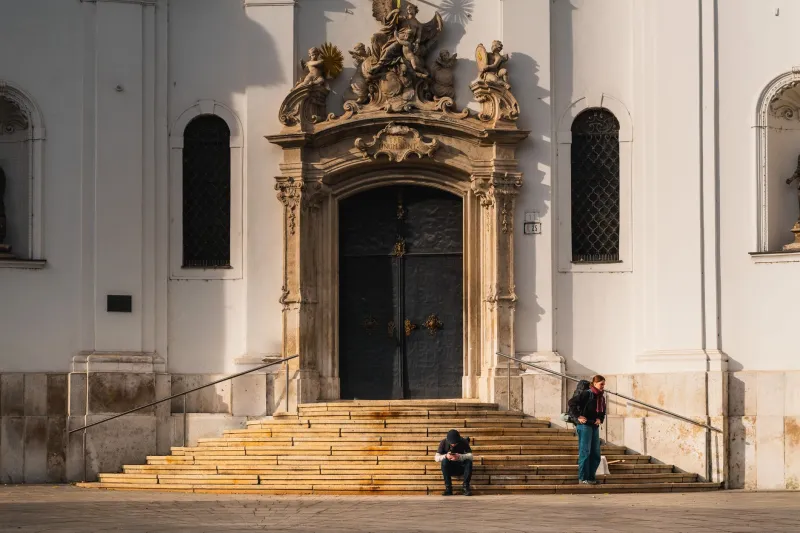
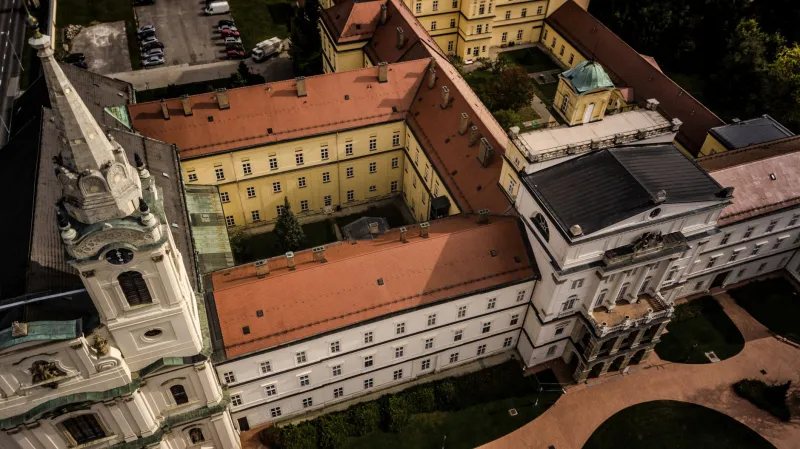
Trnava has long carried the nickname "Little Rome of Slovakia" — a city so dense with churches, chapels, and monastery courtyards that you can barely walk two blocks without stumbling into a baroque facade. Most of those spaces are active, well-maintained, and deeply embedded in the city's Catholic identity. But a handful — particularly smaller auxiliary chapels, former monastery halls, and deconsecrated storage spaces attached to larger religious complexes — have been sitting quietly underutilized for years.
That's where organizer Matúš Kováč saw an opening. Not literally a loophole, he's quick to clarify, but a genuine conversation.
"I grew up going to mass here," says Kováč, 31, who runs a small collective called Rezonancia that puts on experimental music events around western Slovakia. "And I also grew up going to underground parties in Bratislava. At some point I stopped thinking of those two things as opposites. The acoustics in these older spaces — the stone, the vaulted ceilings, the natural reverb — it's extraordinary. No club engineer in the world can build that."
Rezonancia held its first event inside a deconsecrated chapel space in 2022, a low-key ambient music evening that drew maybe sixty people. Word spread quietly. By their third event, they had a waitlist.
Not Everyone Is Comfortable With the Remix
To be clear: this isn't a story of churches being taken over or desecrated. The events happening in Trnava exist in a careful, negotiated gray zone — and the people involved are very deliberate about that distinction.
Father Andrej, a priest connected to one of the city's larger parishes who agreed to speak generally about the trend (he asked that his full name not be used), describes his own reaction as "complicated curiosity."
"The Church has always used music as a path to something greater," he says. "The question I ask myself is whether the intention behind the music matters, or whether the music itself carries something sacred regardless of the genre. I don't have a clean answer to that. But I think the question is worth sitting with."
Not every clergy member in the city shares even that level of openness. A few have been vocal in local community forums about what they see as a commercialization — or worse, a trivialization — of spaces that carry centuries of prayer and grief and celebration. That tension hasn't gone away, and Kováč and his collaborators know it.
"We're not trying to make a statement against religion," says DJ and producer Simona Blaho, 27, who has performed at two Rezonancia events. "If anything, I feel more aware of where I am when I'm playing in a space like that. You can feel the weight of it. It changes how you approach the music."
The Acoustic Argument
Here's something worth understanding if you've never stood inside a Trnava church at night with no tourists and no liturgy: the silence inside those walls is its own kind of loud. Stone absorbs and reflects sound in ways that modern construction simply doesn't replicate. Blaho describes the experience of hearing her own compositions bounce off a vaulted ceiling as "like the room is playing back at you."
For electronic artists working with ambient textures, drone frequencies, or slower, more meditative techno — think less Berlin warehouse rave, more late-night headphone album — these spaces offer something genuinely irreplaceable. The reverb tails stretch out for seconds. A single synthesizer note can feel like it's filling a cathedral because, technically, it is.
Sound designer Tomáš Mináč, who has helped with the technical setup for several events, laughs when asked about the challenges. "You have to completely rethink your approach. You're not fighting the room — you're collaborating with it. The room has opinions."
What the Kids Are Actually Looking For
Spend any time talking to the people who show up to these events and a pattern emerges pretty quickly. Many of them are in their twenties and early thirties, and a surprising number describe themselves as having some kind of lapsed or complicated relationship with organized religion. They're not there to mock the space. If anything, they're drawn to it.
"I stopped going to church in my teens," admits Petra, a 25-year-old graphic designer who attended a Rezonancia event last spring. "But when I'm in that space listening to music, I feel something I don't feel in a regular club. I don't know what to call it. It's not religious exactly. But it's not nothing either."
This is the part of the story that's harder to quantify but maybe the most interesting. Younger generations across Europe — and honestly, across the US too — have been drifting away from traditional religious institutions for decades. But the hunger for ritual, for communal experience, for something that feels bigger than the everyday, hasn't gone anywhere. It's just looking for new containers.
Trnava's sacred spaces, it turns out, might be some of the best containers around.
Where It Goes From Here
Rezonancia has been careful to keep their events small, ticketed in advance, and framed around respect for the spaces they use. They don't advertise heavily. They don't allow photography inside during performances. They've turned down sponsorship offers from alcohol brands specifically because they don't want the associations.
Kováč is cautiously optimistic about the future, but he's not naive about the fragility of what they've built. "One bad night, one person who doesn't understand what this is supposed to be, and it's over," he says. "So we're slow about it. We'd rather do ten perfect events than a hundred mediocre ones."
For now, the experiment continues — quietly, reverently, and with a kick drum that probably rattles the old bones in the walls just a little.
If you're visiting Trnava and want to experience something genuinely unlike anything you'll find on a tourist itinerary, keep your ears open. The next event announcement usually goes out through word of mouth, a few local Facebook groups, and the occasional hand-typed flyer near a very old door.
The room, as always, has opinions. Apparently, so does the music.