The Herbal Cola That Beat Coke: Inside Trnava's Kofola Loyalty
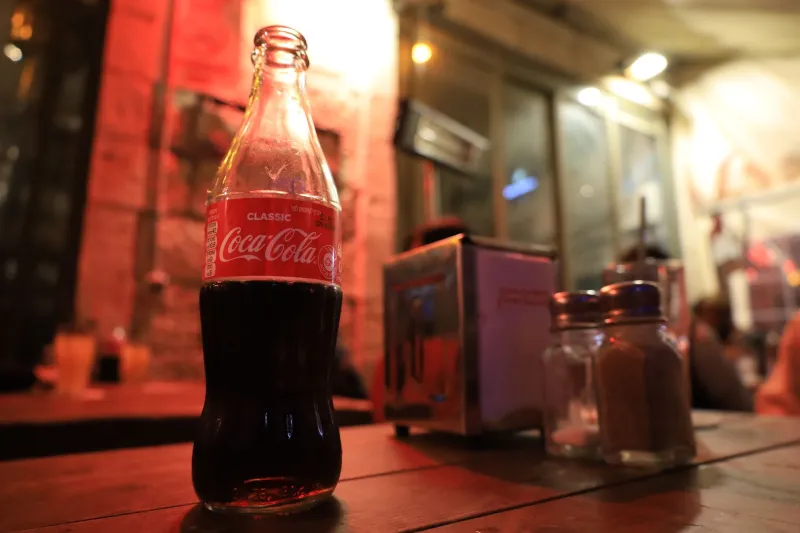
Order a Coke in a Trnava café and you may get a polite pause. Not a hostile one. More like the pause of someone deciding whether to correct you or simply bring you the thing you asked for. Because in many parts of Slovakia, the default cola is not red. It is brown, herbal, slightly less fizzy, and sold under a name that American visitors often mispronounce on the first try: Kofola.
Kofola is not a niche retro product. It is a mainstream drink with a cult following, a family-history backstory, and a taste that divides outsiders almost immediately. Some Americans describe it as cola mixed with cough syrup and a Christmas cookie. Others become quietly obsessed. There is rarely a middle ground.
What exactly is Kofola?
Kofola is a Czechoslovak herbal cola-style beverage that first appeared in 1959. It was developed as a domestic alternative to Western colas, which were not exactly flowing freely in communist Czechoslovakia. The recipe reportedly includes herbal extracts, licorice, cinnamon, citrus notes, and caramel, giving it a flavor that is darker and more botanical than the corn-syrup sweetness Americans expect from a mainstream soda.
It is less carbonated than Coke. It is less sugary, or at least it tastes that way. It has a slightly medicinal edge that is either the whole point or the dealbreaker, depending on your palate. Think of it as the difference between a mass-market lager and a local bitter: not automatically better, but unmistakably specific.
From communist-era substitute to local badge
After 1989, Western brands flooded into Czechoslovakia and then Slovakia. Coca-Cola and Pepsi had money, shelf space, and the cool factor of the outside world. Kofola could have become a footnote, a curiosity remembered by people who grew up drinking it at school canteens and family visits.
Instead, it came back. Kofola was revived and repositioned in the 2000s, leaning into its heritage without turning into a museum piece. Today it is sold in bottles, cans, and on tap. It has a recognizable logo and a place in the national conversation that is hard to explain to someone who did not grow up here. It is not just a drink. It is a small, everyday way of choosing local over global.
That does not mean every Slovak is loyal. Plenty of people drink Coke, Pepsi, or whatever is cold and nearby. But in Trnava, Kofola has a particular kind of social weight. It shows up in cafés, pubs, family kitchens, and summer festivals. It is the thing you order when you want something familiar, and it is the thing you offer a guest when you want them to understand where they are.
How Trnava drinks it
In Trnava, Kofola is not treated as a novelty. It is treated as a normal beverage with its own rituals. On a hot day, it comes in a glass bottle or on tap, sometimes with a slice of lemon. In winter, it still appears, because Slovaks do not abandon their soda loyalties just because the square is covered in frost.
Families often keep Kofola syrup at home and mix it with water and carbonation, which gives it a DIY quality that Americans associate more with iced tea or lemonade than with cola. In cafés around Trojičné námestie, you can order it like any other soft drink. No one will make a speech about communism. They will just bring it to you, and then watch your face as you take the first sip.
That first sip is the real test. Kofola does not hit like Coke. It does not have that sharp, sugary snap. It is rounder, more herbal, and a little quieter. If you are used to American soda, it may taste like a drink that was designed by a pharmacist who was also a gardener. That is not far off.
Why Americans get surprised
American visitors tend to assume that a cola-style drink is either Coke or Pepsi, with maybe a store brand in the mix. Kofola scrambles that assumption. It looks like cola. It is sold like cola. But it tastes like something else entirely — something with a history, a regional identity, and a slightly bitter edge.
The surprise is not just the flavor. It is how seriously people take it. Ask a Trnava local about Kofola and you may get a story about a grandmother, a school trip, a summer job, or a bottle shared on a hike. Ask about Coke and you will probably get a shrug. That is the difference. Kofola has memory attached to it.
There is also a practical reason it appeals to locals: it is not as sweet. If you have ever finished a American cola and felt like you just drank a dessert, Kofola can feel like a relief. It is still a soft drink. It is still a treat. But it sits differently on the tongue and in the stomach.
Where to try it in Trnava
You do not need a special tour. Walk into almost any café or pub in the old town and ask for Kofola. If they have it on tap, take it on tap. If they have it in a glass bottle, take that. If they offer it with lemon, say yes. Then sit near a window, watch the square, and give it three sips before you decide. The first sip is shock. The second is negotiation. The third is where loyalty begins.
If you hate it, that is fine. Not every local loves it either. But do not call it off-brand Coke. That is like calling a neighborhood pub an off-brand Applebee's. It misses the point entirely. Kofola is not trying to be Coke. It is trying to be Kofola, and in Trnava, that is usually enough.