Tomatoes on the Tower, Mint in the Alley: Meet the People Growing Trnava From the Ground Up
There's a patch of kale growing in a crack of a courtyard wall on Hlavná Street that most people walk past without a second glance. It's not much — a few sturdy leaves pushing through crumbling mortar — but to Marta Horáčková, a retired schoolteacher who planted it there two springs ago, it represents something considerably larger than a salad ingredient. "I wanted to see if the city could feed itself," she says, not entirely joking. "Even just a little bit. Even just symbolically."
Marta is part of a quietly growing movement reshaping how Trnava looks, smells, and in some cases tastes. Community gardening has taken root across the city in ways nobody organized, nobody funded, and nobody — frankly — asked permission for. Rooftop plots. Guerrilla herb gardens tucked into medieval alleyways. Shared vegetable beds on strips of land between apartment blocks. It's scrappy, it's imperfect, and it's absolutely thriving.
The Accidental Gardeners
Ask anyone involved how they got started and the answer is almost always some variation of I just got tired of looking at that ugly empty space. For Jakub Ferko, a high school art teacher who now tends a rooftop vegetable garden above a building near the Baroque city center, the origin story started with a bucket of soil and zero plan. "I dragged some compost up four flights of stairs on a Saturday," he says. "My wife thought I'd lost my mind. By June we had zucchini."
Jakub's rooftop setup has since expanded to include tomatoes, peppers, three kinds of lettuce, and an increasingly ambitious herb section. He shares the surplus with neighbors, trades seedlings with other rooftop growers across the city, and hosts informal weekend workshops for anyone curious enough to climb the stairs. None of this was designed. It evolved the way good things often do — out of stubbornness and a little bit of soil.
The movement draws from an unexpectedly wide cross-section of Trnava's population. There are retirees who grew up gardening in village plots and find urban growing a natural extension of lifelong habit. There are young artists who see the act of planting food in unconventional spaces as a form of low-key protest. There are families with small kids who want their children to know where vegetables come from before they're old enough to think it's boring. What unites them isn't ideology — it's frustration with unused space and a preference for doing something rather than complaining.
Medieval Walls, Modern Roots
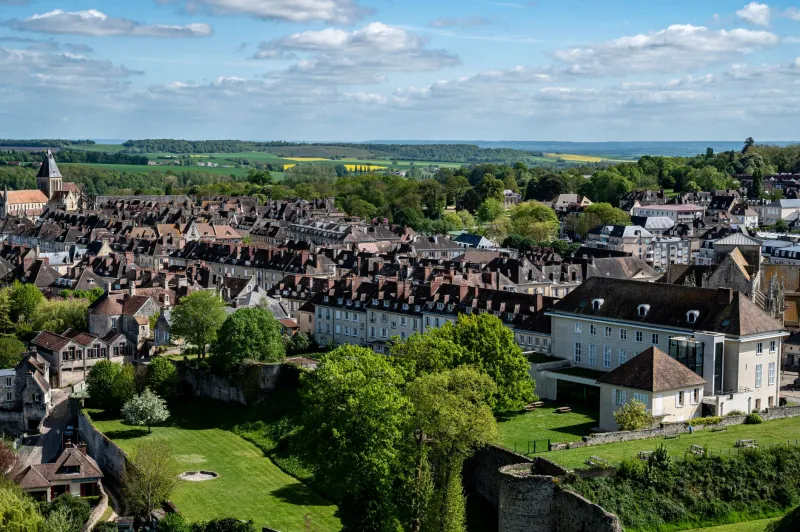
Trnava's urban fabric presents unusual opportunities for this kind of creative reclamation. The old city is dense and layered — centuries of construction and reconstruction have left behind odd pockets of forgotten ground. Courtyards that once served practical purposes now sit half-empty. Strips of land between buildings accumulate gravel and cigarette butts. Even the base of the old city walls, in certain stretches, offers a narrow band of soil that nobody has formally claimed.
This is where Trnava's guerrilla gardeners get creative. Herbs planted in recycled containers anchored to iron railings. Climbing beans trained up sections of fence that nobody uses. Strawberries in gaps between cobblestones where weeds would otherwise take over. The effect is incremental and subtle — you have to slow down and look — but once you start noticing it, the city feels different. More alive. More cared for.
Lucia Vargová, a visual artist who works primarily in printmaking, started a guerrilla herb garden in a narrow alley near the city's Dominican church about three years ago. She planted lemon balm, thyme, and wild chamomile in containers she left deliberately unlabeled. "I wanted to see if people would interact with it or ignore it," she says. "Mostly they interact. People pick the herbs. Someone added rosemary without telling me. I found out because it was just there one morning."
That anonymous rosemary addition is, in its own quiet way, the whole story.
Growing Against the Grain
There's an undercurrent of gentle defiance running through Trnava's urban gardening community that has less to do with politics and more to do with values. Slovakia's relationship with industrial food production is complicated — agricultural land was collectivized under communism, privatized chaotically after 1989, and now sits in a landscape dominated by large-scale farming operations that prioritize export crops over local food systems. Growing your own, even in a tiny rooftop patch, is a statement about what kind of relationship with food you want to have.
"I know my tomatoes cost more in time and effort than buying them at the supermarket," Jakub Ferko admits. "But I know exactly where they came from. I know what's in the soil. That matters to me in a way I can't fully explain."
Marta Horáčková frames it differently. She grew up in a village where everyone had a garden, and the move to city life always felt like a loss she couldn't quite name. "Urban gardening gave me back something I didn't know I was missing," she says. "It's not just about food. It's about being connected to something that grows."
What's Actually Growing
The variety on display across Trnava's community gardens reflects both practical thinking and personal quirks. Tomatoes and zucchini are ubiquitous — reliable, productive, crowd-pleasing. Herbs are everywhere, particularly the resilient ones: mint, thyme, oregano, sage. Some growers have gotten ambitious with peppers, eggplant, and even small fruit trees in large containers.
But the more interesting discoveries are at the edges. One community plot near a housing estate has a dedicated section for heritage Slovak vegetable varieties — older cultivars of cabbage and root vegetables that aren't available in any supermarket. Another rooftop garden has become an informal experiment in growing plants typically associated with warmer climates, testing what Trnava's summers can actually support. The answer, apparently, is more than you'd think.
The Community That Grew Around the Gardens
Maybe the most significant harvest from all this activity isn't anything you can eat. It's the connections. Neighbors who never spoke now swap seedlings. Strangers bond over shared pest problems. An informal network of growers has emerged that trades knowledge, tools, and surplus produce without any formal structure or membership fees.
Lucia Vargová started hosting occasional evenings in her alley garden — informal gatherings where people bring food, share wine, and talk. "It started because I wanted to introduce the gardeners to each other," she says. "Now it's just a reason to be outside together in a beautiful space."
For a city with as much history as Trnava — layers of it, centuries deep — there's something fitting about new growth pushing up through the old. The medieval walls are still standing. The Baroque churches still anchor the skyline. And in the gaps between all that grandeur, something small and green and stubbornly alive is finding its way toward the light.