No Golden Arches Here: How Trnava Quietly Became Europe's Most Deliciously Independent Food City
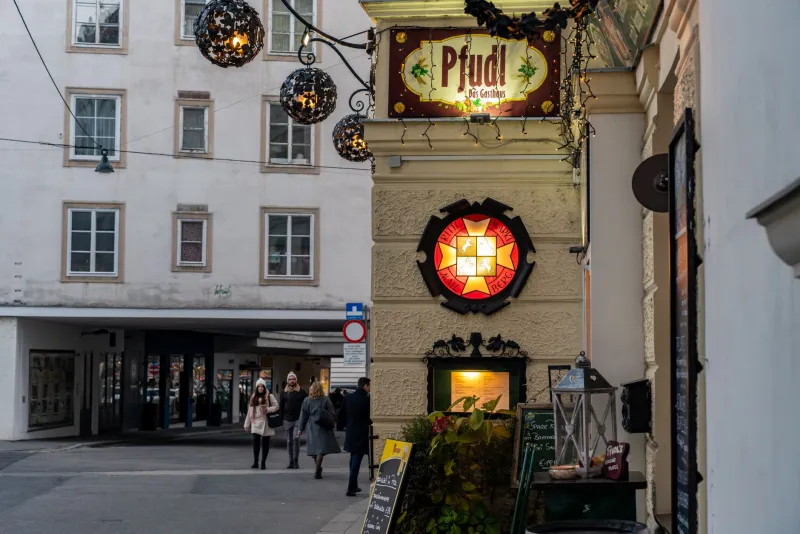
Picture yourself standing in the middle of Trnava's historic center on a Saturday afternoon. The cobblestones are worn smooth by centuries of foot traffic. The baroque towers throw long shadows across the square. You're hungry, and you start scanning for something familiar — a Subway, a McDonald's, a KFC, literally anything with a logo you recognize from back home.
You won't find one.
That's not an accident. And it's not a quirk of geography. It's a choice — one that Trnava has been quietly, stubbornly making for years. In an era when European city centers increasingly look like carbon copies of each other, Trnava has held the line in a way that's starting to turn heads far beyond Slovakia's borders.
The Numbers That Make You Do a Double-Take
Let's be honest: when most Americans hear "no chain restaurants," they picture a sleepy village with two restaurants total, both of which close on Wednesdays for no clear reason. Trnava is the opposite of that.
The city runs a genuinely dense, diverse, and deeply satisfying food scene — dozens of independently owned restaurants, wine bars, coffee shops, and street-food stalls, all operating without a corporate playbook telling them what to put on the menu. Local food writers who've tracked the scene for years point out that Trnava has managed to keep global fast-food franchises almost entirely out of its historic core, a feat that cities five times its size have completely failed to pull off.
So how did they do it?
It Starts With the Buildings
One underappreciated piece of the puzzle is architectural. Trnava's old town is packed with protected historic structures, and many of the ground-floor commercial spaces simply don't conform to the standardized footprints that global chains require for their operations. You need a certain square footage, a certain kitchen configuration, a certain loading-dock setup. Medieval Slovak architecture wasn't exactly designed with Chipotle's operational flow in mind.
But that's only part of the story. Plenty of cities have historic buildings and still manage to cram a Starbucks into every third corner. What makes Trnava different is the layer of community will sitting on top of those physical constraints.
A Culture That Treats Eating Like It Actually Matters
Talk to locals about food in Trnava and you'll notice something pretty quickly: they have opinions. Strong ones. There's a genuine cultural investment in where food comes from, who makes it, and what it says about the community. Eating at a family-run Slovak restaurant isn't just a meal — it's a small act of participation in something that belongs to the city.
This isn't nostalgia for its own sake. Younger generations in Trnava are just as plugged-in as anyone else, scrolling TikTok and watching the same Netflix shows as kids in Columbus or Charlotte. But many of them have grown up with a pretty clear-eyed understanding of what gets lost when a city's food culture goes generic. They've watched it happen to other places. They don't want it to happen here.
Local restaurant owners describe an almost informal but remarkably effective social pressure that operates around the question of who gets to set up shop in the old town. It's not a formal boycott. It's more like a collective shrug in the direction of anything that feels imported and disposable.
What the Policy Side Actually Looks Like
Beyond culture, there are real structural elements at play. Zoning considerations, heritage preservation rules, and the priorities of local urban planning have all contributed to an environment where independent operators have a genuine fighting chance against well-capitalized chains.
Small business support networks in the region have also played a role, helping local restaurateurs with everything from licensing navigation to marketing. It's not a perfect system — no system is — but the cumulative effect is a playing field that doesn't automatically tilt toward whoever has the deepest pockets and the most aggressive real estate team.
City officials have, at various points, been pretty explicit about valuing the economic and cultural diversity that independent dining creates. The argument isn't anti-business — it's actually pro-business, just on a human scale. A city full of unique restaurants creates a more compelling destination than a city that looks like every airport food court in the world.
Why American Travelers Are Paying Attention
Here's where it gets interesting for anyone planning a European trip from the US side of the Atlantic.
American travelers have been doing a quiet but significant rethink about what they actually want from international travel. The Instagram-famous cities are still popular, sure. But there's a growing cohort of visitors — often in their 30s and 40s, often veterans of a dozen European trips — who are specifically seeking out places that feel genuinely unreplicable. Places where the answer to "where should we eat?" isn't a list of spots that could just as easily exist in Dallas.
Trnava delivers that in a way that's hard to fake. When you sit down for lunch at a family restaurant tucked into a baroque courtyard and the menu is rooted in actual Slovak culinary tradition — not a sanitized, tourist-friendly approximation of it — there's a specific kind of satisfaction that no amount of globally optimized dining can replicate. You feel like you're somewhere. Specifically, irreducibly somewhere.
Food tourism is increasingly cited as a primary driver of destination choice, and Trnava's independent scene has quietly become one of its strongest selling points.
The Bigger Lesson
There's a reason urban planners and food writers from other European cities have started paying attention to the Trnava model. The question of how to preserve local food culture in the face of global franchise expansion is one that cities from Lisbon to Krakow are wrestling with, often unsuccessfully.
Trnava doesn't have a magic formula. What it has is a combination of physical circumstance, community values, and policy alignment that happened to add up to something genuinely rare. The city stayed weird — in the best possible sense — while the rest of the continent was busy standardizing itself into blandness.
For anyone who's ever stood in a European city square, surrounded by the same six chain restaurants you could find in any American suburb, and felt a quiet deflation — Trnava is the antidote.
No golden arches. No corporate loyalty apps. No laminated menus designed by a committee in another country.
Just food, made by people who live here, for people who care where they are.
That might sound simple. In 2025, it's actually kind of revolutionary.