Sacred Walls, Living Stories: Why Trnava's Ancient Monasteries Are Calling to a New Generation of Travelers
There's a moment that happens to almost every visitor who steps inside the Church of St. John the Baptist in Trnava. The noise of the street — the trams, the café chatter, the general hum of a small city going about its Tuesday — just stops. Not because the building is particularly hushed, though it is. It stops because the sheer density of human intention packed into those baroque walls hits you somewhere below the rational mind.
Trnava has been called the "Slovak Rome" for so long that locals have started to roll their eyes at the nickname. Fair enough. But spend a few hours wandering the city's religious architecture, and you start to understand how the label stuck. This compact city of roughly 65,000 people contains more churches per square mile than most European capitals. And increasingly, those churches — along with the monasteries, seminaries, and ecclesiastical museums tucked between them — are attracting a very different kind of pilgrim than the ones who originally knelt on these stone floors.
More Than Stained Glass and Piety
American travelers, especially those arriving after a whirlwind few days in Vienna or Budapest, tend to arrive in Trnava with modest expectations. They've been told it's "worth a half-day stop." What they don't expect is to spend four hours inside a converted Jesuit complex and walk out genuinely moved.
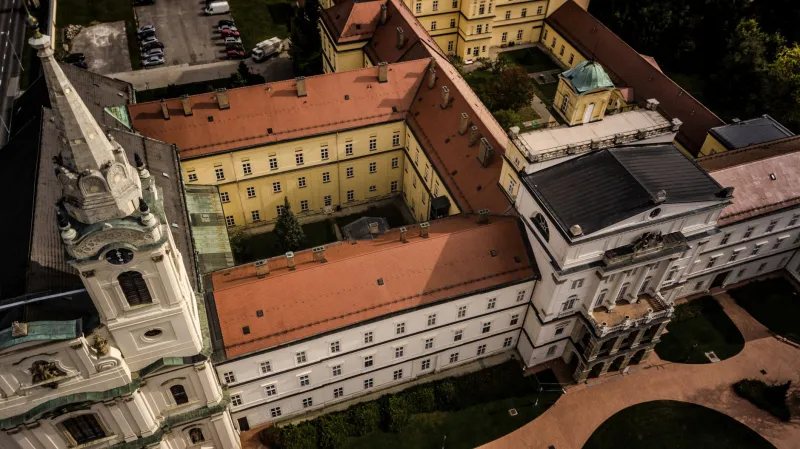
The Western Slovak Museum, housed partly in a former Jesuit university building dating to the 17th century, is a good place to start recalibrating your assumptions. The collection spans archaeology, fine art, and regional history, but the building itself does half the storytelling. High vaulted ceilings, faded frescoes that survived multiple regime changes, and corridors that once trained priests now funnel visitors past Roman coins and medieval reliquaries with equal nonchalance.
What strikes most people isn't the individual artifacts — though some are genuinely remarkable — but the layering. You're standing in a space that has functioned continuously, in one form or another, for centuries. Communist authorities tried to strip it of meaning. They didn't entirely succeed.
The Jesuits Left Their Fingerprints Everywhere
It's impossible to talk about Trnava's spiritual architecture without talking about the Jesuits. They arrived here in the 16th century and essentially rebuilt the city's intellectual and spiritual infrastructure from scratch. The University of Trnava, founded in 1635, was Central Europe's first Jesuit university — and its influence radiated outward in ways that shaped Slovak Catholic identity for generations.
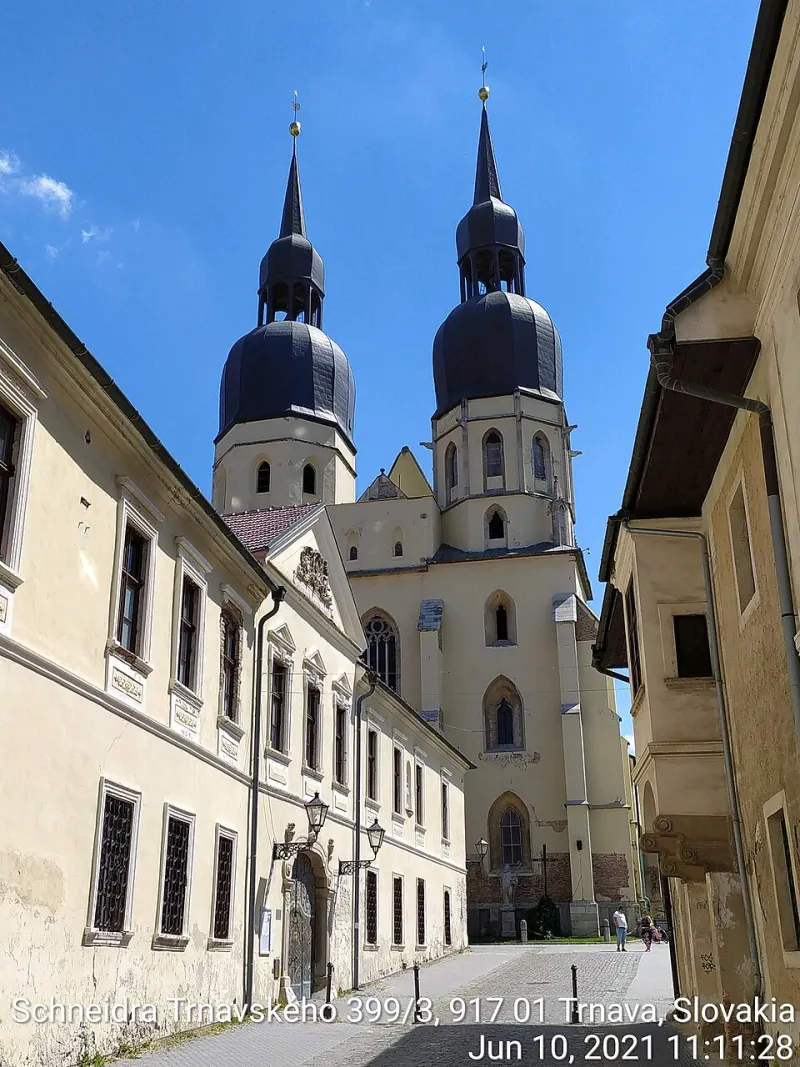
The Cathedral of St. John the Baptist, completed in 1637, remains their most visible legacy. It was modeled on the Gesù in Rome — yes, that Gesù — which tells you something about the ambition behind it. The interior is a full baroque assault: gilded altars, dramatic ceiling paintings, marble that seems almost aggressively confident for a city this size. It's not subtle. It was never meant to be.
But here's the thing about the cathedral that the guidebooks tend to underplay: it still functions as an active place of worship. Mass is said here. Locals come in on their lunch breaks and sit quietly in the pews. There's a strange and genuinely affecting tension between the building as a heritage site and the building as a living community space. That tension is, arguably, more interesting than anything hanging on the walls.
Spiritual Tourism Is Having a Moment — and Trnava Is Ready
If you've been paying attention to travel trends over the past few years, you've probably noticed the rise of what tourism researchers are calling "meaningful travel" or "inner tourism." Americans, in particular, are increasingly seeking experiences that go beyond the checklist. Not just "I saw the thing" but "the thing changed something in me."
Sacred spaces — monasteries, temples, pilgrimage routes — are quietly becoming some of the most sought-after destinations in this category. The Camino de Santiago has been overbooked for years. Meditation retreats in Kyoto fill up months in advance. And slowly, very slowly, places like Trnava are showing up on the radar of travelers who want the depth without the crowds.
The Clarist Monastery on Kapitulská Street is a perfect example of this shift in action. Parts of the complex have been opened to visitors in recent years, offering a glimpse into a world that operated almost entirely outside of public view for centuries. The Gothic church attached to the monastery — one of the oldest surviving structures in the city — has a quality of stillness that's hard to manufacture. You either find it or you don't. Most people who stumble in find it.
What These Spaces Say About Slovak Identity
Slovakia's relationship with religion is complicated in ways that Americans sometimes find surprising. The country is predominantly Catholic, but it's a Catholicism shaped by occupation, suppression, and survival. Under communism, religious practice was discouraged, monitored, and sometimes punished. Churches that continued to function did so under pressure. Monasteries were closed. Clergy were imprisoned.
What that history produced is a form of faith — and a relationship to religious architecture — that's less triumphalist than what you might find in, say, Poland, and more quietly stubborn. The churches in Trnava feel like they've earned their place. They've been through something. That quality is hard to articulate but easy to feel.
For American visitors, particularly those from faith traditions of their own, this resonates in unexpected ways. The sacred spaces here don't feel like museum pieces performing their own history. They feel inhabited. Worn in. Real.
Practical Notes for the Curious Traveler
If you're planning a visit and want to engage with Trnava's religious heritage seriously rather than superficially, a few suggestions:
Go early. The Cathedral of St. John the Baptist before 9 a.m., when tourist traffic is minimal and the morning light comes through the nave at an angle that makes the gilded altars look almost unreasonably beautiful, is a different experience than the midday version.
Don't skip the smaller churches. The Church of the Holy Trinity and the Church of St. Nicholas both reward slower attention. They're less famous, which means fewer people and more space to actually absorb what you're looking at.
Talk to the people who work there. Museum staff at the Western Slovak Museum, in particular, tend to be genuinely knowledgeable and — if you catch them on a good day — remarkably candid about the complicated history these buildings carry.
And maybe most importantly: resist the urge to photograph everything immediately. Give yourself ten minutes in each space before the phone comes out. You might be surprised what you notice when you're not already composing the shot.
The Quiet Revolution Happening Inside Old Walls
Trnava's religious institutions are threading a needle that a lot of historic cities struggle with: staying relevant to contemporary visitors without hollowing out whatever made them significant in the first place. It's not a perfect process. Some spaces feel a bit too curated, a bit too eager to explain themselves. Others feel frozen in amber, slightly indifferent to the visitor experience.
But the best of them — the cathedral at dawn, the Clarist monastery on a quiet afternoon, the university courtyard when the students are between classes — manage something genuinely rare. They make you feel like you've arrived somewhere that existed before you got there and will continue existing after you leave. In an era of experiences designed to be consumed and shared, that kind of permanence is, unexpectedly, exactly what a lot of people are looking for.
Trnava has been here for centuries. It's not in a hurry. Neither, it turns out, should you be.